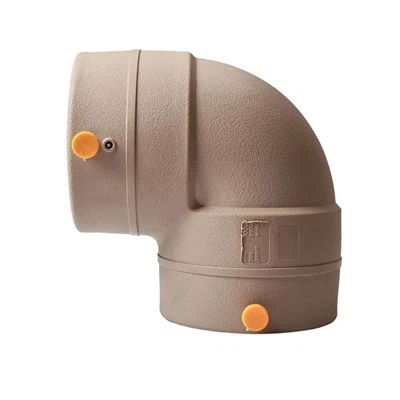


What is the bending radius of an Hdpe Female Adaptor?
As a supplier of HDPE female adaptors, I often encounter questions from customers about various technical aspects of our products. One of the frequently asked questions is about the bending radius of an HDPE female adaptor. In this blog post, I will delve into this topic to provide you with a comprehensive understanding.


Understanding HDPE Female Adaptors
Before we discuss the bending radius, let's first understand what an HDPE female adaptor is. HDPE, or High - Density Polyethylene, is a thermoplastic polymer known for its high strength - to - density ratio, chemical resistance, and durability. A female adaptor is a fitting that has a female thread or socket end, which is used to connect different pipes or components.
HDPE female adaptors come in various types, such as HDPE Female Threaded Adaptor. These adaptors are commonly used in plumbing, irrigation, and industrial piping systems. They play a crucial role in ensuring a secure and leak - free connection between pipes of different sizes or materials.
Importance of Bending Radius
The bending radius of an HDPE female adaptor is a critical parameter. It refers to the minimum radius to which the adaptor can be bent without causing damage to the material. Understanding the bending radius is essential for several reasons.
Firstly, in installation scenarios, pipes and adaptors often need to be routed around obstacles. If the bending radius is not considered, the adaptor may be bent beyond its limit, leading to cracks, leaks, or reduced structural integrity. This can result in costly repairs and downtime in the system.
Secondly, the bending radius affects the flow characteristics of the fluid or gas passing through the adaptor. If the adaptor is bent too sharply, it can cause turbulence, which may increase pressure drop and reduce the efficiency of the system.
Factors Affecting the Bending Radius
Several factors influence the bending radius of an HDPE female adaptor.
- Wall Thickness: Thicker - walled HDPE adaptors generally have a larger bending radius. This is because the additional material provides more resistance to bending, and a larger radius is required to avoid over - stressing the material.
- Temperature: HDPE is a thermoplastic, and its properties are affected by temperature. At higher temperatures, the material becomes more flexible, and the bending radius can be smaller. Conversely, at lower temperatures, the material becomes stiffer, and a larger bending radius is needed.
- Pipe Diameter: Larger - diameter HDPE female adaptors typically have a larger bending radius. This is because the larger cross - sectional area of the pipe requires a greater curvature to bend without causing damage.
Determining the Bending Radius
The bending radius of an HDPE female adaptor can be determined through a combination of theoretical calculations and practical testing.
Theoretical calculations are based on the mechanical properties of HDPE, such as its modulus of elasticity and yield strength. However, these calculations are often idealized and may not account for all real - world factors.
Practical testing is a more reliable method. Manufacturers typically conduct bending tests on samples of the adaptors to determine the minimum bending radius. These tests involve gradually bending the adaptor until it shows signs of damage, such as cracking or deformation. The radius at which damage occurs is then recorded as the maximum allowable bending radius.
In general, for HDPE female adaptors, the bending radius is often specified as a multiple of the pipe diameter. For example, a common rule of thumb is that the bending radius should be at least 20 times the diameter of the pipe for standard HDPE pipes. However, this can vary depending on the specific product and application.
Applications and Considerations
HDPE female adaptors are used in a wide range of applications, from residential plumbing to large - scale industrial projects. In each application, the bending radius must be carefully considered.
In residential plumbing, where space is often limited, the ability to bend the adaptors around corners and obstacles is crucial. However, it is important to ensure that the bending radius is within the allowable limits to avoid future problems.
In industrial applications, such as chemical processing plants or oil and gas pipelines, the consequences of an improper bending radius can be more severe. These systems often operate under high pressure and carry hazardous materials. Therefore, strict compliance with the recommended bending radius is essential to ensure safety and reliability.
If you are using HDPE female adaptors in conjunction with other components, such as Male Adaptor HDPE or Flange Adaptor for HDPE Pipe, it is important to consider the overall system design. The bending radius of the adaptors should be compatible with the other components to maintain a smooth and efficient flow.
Contact for Procurement
If you are in the market for high - quality HDPE female adaptors, we are here to assist you. Our products are manufactured to the highest standards, and we can provide you with detailed information about the bending radius and other technical specifications. Whether you have a small - scale residential project or a large - scale industrial application, we have the right solution for you.
We invite you to reach out to us for further discussions on your specific requirements. Our team of experts is ready to answer your questions and help you make the best decision for your project.
References
- "Plastic Pipes Handbook" by C. R. Austin.
- ASTM standards related to HDPE pipes and fittings.
- Manufacturer's technical documentation for HDPE female adaptors.