
The PPR Electrofusion Fittings Manufacturer!
Zhejiang Fenghe Pipe Industry Co., Ltd., established in 2018, is a limited liability company dedicated to the production of electrofusion fittings.
-
![PPR Electrofusion]() PPR ElectrofusionThe DN200 PPR electrofusion coupling is designed for large-diameter hot water transmission pipelines. Manufactured using Borouge's RA140E or PPB4228 raw materials, its grey color indicates a...view more
PPR ElectrofusionThe DN200 PPR electrofusion coupling is designed for large-diameter hot water transmission pipelines. Manufactured using Borouge's RA140E or PPB4228 raw materials, its grey color indicates a...view more -
![Electrofusion PPR]() Electrofusion PPRThe DN160 electrofusion PPR fitting is designed for medium-duty hot water pipelines, specifically for connecting to main district heating supply lines with large diameters. It is manufactured...view more
Electrofusion PPRThe DN160 electrofusion PPR fitting is designed for medium-duty hot water pipelines, specifically for connecting to main district heating supply lines with large diameters. It is manufactured...view more -
![PPR Electrofusion Flange]() PPR Electrofusion FlangePPR Electrofusion Flange Headview more
PPR Electrofusion FlangePPR Electrofusion Flange Headview more
Model:FL160-PPR
Raw materials:Borouge's RA140E or PPB4228
Its flange end features standardized bore holes for straightforward mating with corresponding... -
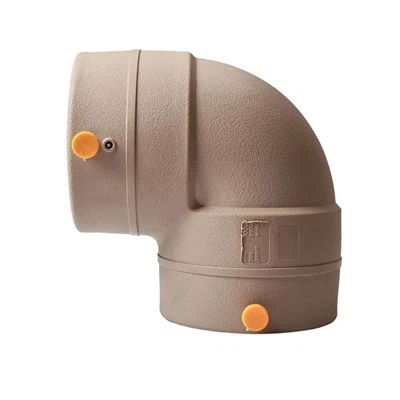
![PPR Electrofusion 90 Degree Elbow]() PPR Electrofusion 90 Degree ElbowThe DN160 PPR Electrofusion 90° Elbow, made from Borealis RA140E/PPB4228 raw material, is rated for a pressure of 20 kg/cm². This gray fitting is designed for 90-degree directional changes in hot...view more
PPR Electrofusion 90 Degree ElbowThe DN160 PPR Electrofusion 90° Elbow, made from Borealis RA140E/PPB4228 raw material, is rated for a pressure of 20 kg/cm². This gray fitting is designed for 90-degree directional changes in hot...view more -
![PPR Electrofusion 45 Degree Elbow]() PPR Electrofusion 45 Degree ElbowThe DN160 PPR Electrofusion 45° Elbow is designed to create a 45° angular connection in hot water systems. Made from Borealis RA140E or PPB4228 raw material in gray and rated for a 20 kg/cm²...view more
PPR Electrofusion 45 Degree ElbowThe DN160 PPR Electrofusion 45° Elbow is designed to create a 45° angular connection in hot water systems. Made from Borealis RA140E or PPB4228 raw material in gray and rated for a 20 kg/cm²...view more -
![PPR Electrofusion Tee]() PPR Electrofusion TeeThe DN160 PPR Electrofusion Tee, manufactured from Borealis RA140E/PPB4228 material in gray and rated for 20 kg/cm² pressure, is designed for splitting or converging flows within hot water systems.view more
PPR Electrofusion TeeThe DN160 PPR Electrofusion Tee, manufactured from Borealis RA140E/PPB4228 material in gray and rated for 20 kg/cm² pressure, is designed for splitting or converging flows within hot water systems.view more -
![PPR Electrofusion Coupler]() PPR Electrofusion CouplerWithin the world of electrofusion fittings, there exists a connector made from a distinct material: the PPR electrofusion fitting. It is not just a connector but a reliable solution for special...view more
PPR Electrofusion CouplerWithin the world of electrofusion fittings, there exists a connector made from a distinct material: the PPR electrofusion fitting. It is not just a connector but a reliable solution for special...view more -
![PPR Electrofusion Pipe Fittings]() PPR Electrofusion Pipe FittingsElectrofusion and butt fusion fittings are specialized components for plastic pipelines. The key difference is that Electrofusion Threaded fittings do not require butt alignment and pressure...view more
PPR Electrofusion Pipe FittingsElectrofusion and butt fusion fittings are specialized components for plastic pipelines. The key difference is that Electrofusion Threaded fittings do not require butt alignment and pressure...view more


Why choose us
Advanced technology
It is a limited liability company specializing in the production of electrofusion pipe fittings. The company adheres to the principle of quality first, adopts new materials and advanced wire filling technology, and rejects post-filling and small pipe fittings.
Production capacity
We have 21 automated production lines with an annual production capacity exceeding 3 million pieces, ensuring a stable supply of standard specifications. Sampling is strictly adhered to during the production process to ensure that the welding performance of each pipe fitting meets the standards.
Our service
After sales service provides thoughtful solutions to address any concerns. Provide free technical guidance, master demonstration of the installation process of electric melting pipe fittings with videos and warm reminders. If there are non-human quality problems with the product, we will respond within 24 hours and provide a return, exchange or replenishment plan within 48 hours.
|
Parameter Category |
Technical Parameter |
Parameter Description |
|
Basic Parameters |
Model: S200-PPR |
Designed specifically for 200mm PPR pipes |
|
Applicable Pipe Diameter |
DN200 PPR Pipe |
|
|
Physical Properties |
Single Weight |
3.315 kg |
|
Dimensions |
50.5 × 50.5 × 34.5 mm |
|
|
Structural Dimensions |
Socket Depth |
101 mm |
|
Fusion Zone Width |
49 mm |
|
|
Overall Height |
201 mm |
|
|
Material Properties |
Wall Thickness |
24 mm (Thickened) |
|
Outer Diameter |
243 mm |
|
|
Inner Diameter |
200 mm |
Advantages of PPR Electrofusion Fittings
Leak-Free Performance:
Once joined, the system becomes a single piece with no mechanical gaps or threads that could loosen over time.
Ideal for Confined Installations:
Electrofusion tools are compact, making these fittings perfect for tight spaces where manual welding is impractical.

Stronger Joint Integrity:
The melted fusion zone between the pipe and fitting is generally stronger than the pipe itself.
Minimal Downtime:
Quick fusion and cooling cycles reduce overall installation time compared to traditional welding methods.
Types of PPR Electrofusion Fittings
Socket Fusion Fittings:
These fittings feature a socket-like structure that allows for the insertion of the pipe end. Heat fusion is used to bond the pipe and fitting together, creating a strong and leak-proof joint.
Threaded Fittings:
Threaded PPR fittings have threads on the inner surface, allowing for easy connection with threaded pipes or other fittings. They are commonly used in applications where disassembly may be required.
Transition Fittings:
Transition fittings are used to connect PPR pipes with other piping materials, such as copper or PVC. They provide a secure and reliable connection between different types of pipes.
Electrofusion Fittings:
These fittings utilize an electrofusion welding process to join the pipe and fitting together. Electric current is applied to melt the material and create a strong bond.
Applications of PPR Electrofusion Fittings
Water Supply Systems
PPR electrofusion fittings are extensively used in potable water distribution networks for both cold and hot water systems in residential, commercial, and institutional buildings. Their non-reactive nature ensures that water quality remains uncontaminated over time, free from rust, scaling, or chemical leaching—common issues with metal pipes.
Industrial Manufacturing
In industrial environments, PPR electrofusion fittings are employed in fluid transport systems for chemicals, coolants, and process water. Their high chemical resistance allows safe conveyance of acids, alkalis, and saline solutions without degradation, making them suitable for pharmaceutical, food processing, and chemical manufacturing plants.
Agricultural Irrigation
PPR electrofusion fittings are increasingly adopted in modern irrigation systems due to their resistance to UV radiation, weathering, and microbial growth. They maintain structural integrity under prolonged sun exposure and fluctuating temperatures, making them ideal for outdoor agricultural setups.
Heating Systems
PPR electrofusion fittings play a vital role in radiant floor heating and radiator-based heating systems. Their thermal stability and low heat conductivity allow for efficient heat transfer and retention, ensuring consistent indoor temperatures.
Cooling Systems
These fittings are also used in chilled water and cooling liquid distribution systems, such as those found in HVAC chillers, data centers, and industrial cooling units. PPR’s low thermal conductivity helps maintain the desired coolant temperature over extended distances, improving energy efficiency.
Construction and Building Projects
During new construction or renovation projects, PPR electrofusion fittings offer significant advantages due to their lightweight design and rapid installation process. The electrofusion method eliminates the need for open flames, solvents, or complex tools, enhancing on-site safety and reducing labor time.
HVAC Systems
PPR electrofusion fittings are widely used in heating, ventilation, and air conditioning (HVAC) systems for transporting hot and chilled water. Their ability to accommodate various pipeline configurations—including bends, branches, and extensions—makes them highly adaptable during system upgrades or expansions.
The Methods Of PPR Electrofusion Fittings
Before starting the socket fusion process, it is crucial to prepare the pipes and fittings. First, ensure that the ends of the pipes and fittings are clean and free from dirt, grease, or other contaminants. Next, use a marker to indicate the depth of insertion for the pipes into the fittings. This marking will help ensure proper alignment during the fusion process.
Once the preparation is complete, the socket fusion tool is used to heat the ends of the pipes and fittings. The tool''s heating element is typically set to a specific temperature recommended by the manufacturer. The pipes and fittings are inserted into the tool, and the heating cycle begins. During this cycle, the tool evenly heats the ends of the pipes and fittings to the desired fusion temperature.
After the heating cycle, the pipes and fittings are quickly removed from the socket fusion tool and immediately joined together. The heated ends of the pipes and fittings are carefully aligned and inserted into each other. It is essential to maintain proper alignment during this step to ensure a secure joint. The fusion process starts as the hot PPR material softens and fuses together. A slight twisting motion can aid in achieving a tight and leak-free connection.
Once the pipes and fittings are joined, they need to cool down and solidify. This cooling period ensures that the fusion joint achieves the necessary strength. It is essential to avoid any movement or disturbance during the cooling process, as it may compromise the joint''s integrity. The cooling duration varies depending on the size and thickness of the pipe, and it is recommended to follow the manufacturer''s guidelines.

Inquiry--- The more detailed information you provide, the more accurate product we could provide you.
Quotation---Resonable quotation with clear specifications.
Sample confirmation---Sample could be sent before the final ordering. T/T 30% in advanced, and the balance could be paid before shipment.
Production---Mass production.
Shipping--- By sea, air or courier. Detailed picture of package could be provided.
Packing Details
We will packing by professional export packing,safety against breakage, finally into the wooden cases/ carton/pallet or customized package.

FAQ
We are one of the most professional PPR electrofusion fittings manufacturers and suppliers in China. Our products are highly appreciated in both domestic and overseas market. Please rest assured to wholesale customized PPR electrofusion fittings at competitive price from our factory.
Electrofusion Ppr, PPR Electrofusion Flange, PPR Electrofusion Pipe Fittings