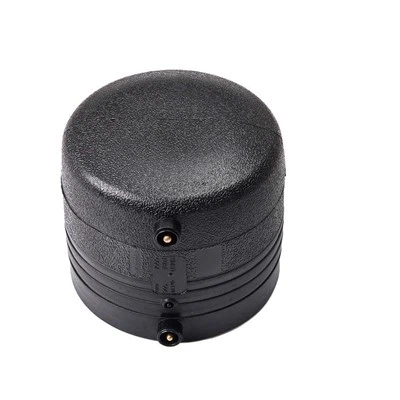


Are HDPE Female Adaptors Flexible?
As a supplier of HDPE Female Adaptors, I often encounter questions from customers regarding the flexibility of these products. In this blog post, I aim to provide a comprehensive analysis of the flexibility of HDPE Female Adaptors, exploring the factors that influence it and its implications in various applications.
Understanding HDPE and Its Properties
High - Density Polyethylene (HDPE) is a thermoplastic polymer known for its high strength - to - density ratio. It is widely used in the manufacturing of pipes, fittings, and adaptors due to its excellent chemical resistance, durability, and relatively low cost. HDPE has a semi - crystalline structure, which gives it certain mechanical properties.
The flexibility of a material is typically defined by its ability to bend or deform under an applied force without breaking. For HDPE, its flexibility is influenced by several factors, including its molecular structure, density, and the presence of additives.
Factors Affecting the Flexibility of HDPE Female Adaptors
Molecular Structure
The molecular chains in HDPE are long and linear, which contributes to its strength. However, the degree of branching in these chains can affect flexibility. A lower degree of branching allows the chains to pack more closely together, resulting in a more rigid material. In contrast, a slightly higher degree of branching can introduce more free volume between the chains, making the material more flexible.
Density
HDPE comes in different densities, and density is a key factor in determining flexibility. High - density HDPE has a more compact molecular structure, which makes it stiffer and less flexible compared to low - density polyethylene (LDPE). Most HDPE Female Adaptors are made from high - density materials to ensure strength and pressure resistance. However, this also means that they have a relatively lower level of flexibility compared to LDPE products.
Additives
Additives can be used to modify the properties of HDPE. Plasticizers, for example, can be added to increase the flexibility of HDPE. These additives work by reducing the intermolecular forces between the polymer chains, allowing them to move more freely. However, the use of plasticizers in HDPE Female Adaptors is often limited because they can potentially affect the chemical resistance and long - term durability of the product.
Flexibility in Practical Applications
In many applications, HDPE Female Adaptors need to be able to withstand some degree of bending or movement. For example, in underground piping systems, the soil can shift over time, causing the pipes to move slightly. In this case, a certain level of flexibility in the adaptors can help prevent cracking or leakage.
However, it's important to note that the flexibility of HDPE Female Adaptors is not as high as some other materials like rubber. They are designed to provide a balance between flexibility and strength. In applications where high flexibility is required, such as in some flexible hoses, other materials may be more suitable.
When connecting HDPE Female Adaptors to other components, such as Male Adaptor HDPE, the adaptors need to be able to conform to the shape of the mating part to ensure a proper seal. While they can bend slightly, excessive force should not be applied during installation, as this can damage the adaptor.


Comparing with Other Types of Adaptors
Compared to metal adaptors, HDPE Female Adaptors offer some advantages in terms of flexibility. Metal adaptors are generally more rigid and less able to withstand bending without deformation. In contrast, HDPE adaptors can tolerate a certain amount of bending, which can be beneficial in applications where there is some movement or misalignment.
However, compared to rubber adaptors, HDPE Female Adaptors are less flexible. Rubber adaptors can be bent and twisted to a much greater extent, making them suitable for applications where extreme flexibility is required. But rubber may not have the same level of chemical resistance and durability as HDPE.
Flexibility Testing and Standards
To ensure the quality and performance of HDPE Female Adaptors, various testing methods are used to evaluate their flexibility. One common test is the bend test, where the adaptor is bent to a certain angle and then checked for any signs of cracking or damage.
There are also industry standards that specify the minimum and maximum levels of flexibility for HDPE products. These standards help ensure that the adaptors meet the requirements of different applications. For example, in the water supply industry, HDPE Female Adaptors need to be able to withstand a certain amount of bending without affecting the flow of water or causing leakage.
Applications Where Flexibility Matters
- Underground Piping Systems: As mentioned earlier, soil movement can occur in underground installations. HDPE Female Adaptors with some flexibility can help accommodate these movements, reducing the risk of pipe failure.
- Marine Applications: In marine environments, waves and tides can cause movement in the piping systems. A certain level of flexibility in the adaptors can help prevent damage due to this movement.
- Industrial Piping with Vibration: In industrial settings, machinery can cause vibrations in the piping systems. Flexible HDPE Female Adaptors can absorb some of these vibrations, protecting the pipes from fatigue and damage.
Applications Where Limited Flexibility is Acceptable
- High - Pressure Systems: In high - pressure applications, the main concern is the strength and pressure resistance of the adaptors. While some flexibility is beneficial, too much flexibility can compromise the integrity of the system under high pressure.
- Structural Piping: In piping systems that are part of a building's structure, the adaptors need to be able to maintain their shape and position. Limited flexibility is acceptable as long as the adaptors can provide a secure connection.
Conclusion
In conclusion, HDPE Female Adaptors do have a certain degree of flexibility, but it is relatively limited compared to some other materials like rubber. The flexibility is influenced by factors such as molecular structure, density, and the use of additives.
In applications where some movement or bending is expected, the flexibility of HDPE Female Adaptors can be an advantage. However, in applications where high flexibility is required, other materials may be more suitable.
If you are in the market for HDPE Female Adaptor or Flange Adaptor for HDPE Pipe, and you have specific requirements regarding flexibility or other properties, I encourage you to reach out for a detailed discussion. We can help you select the most appropriate products for your needs and ensure a successful installation.
References
- ASTM International. (Year). Standard Specification for High - Density Polyethylene (HDPE) Plastic Pipe and Fittings.
- European Committee for Standardization. (Year). EN Standards for HDPE Piping Systems.
- Plastics Pipe Institute. (Year). Technical Reports on HDPE Materials and Applications.