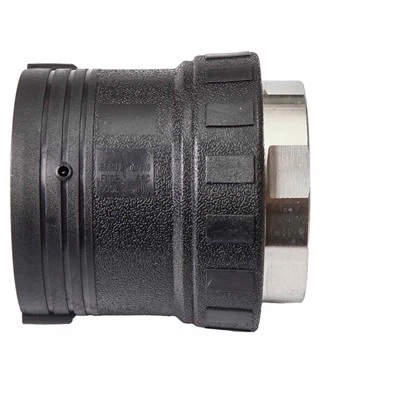


Hey there! As a supplier of Female Thread Adaptor HDPE, I often get asked a bunch of questions about our products. One question that pops up quite a bit is, "Is a Female Thread Adaptor HDPE biodegradable?" Well, let's dive right into it and break this down.
First off, let's talk a bit about what HDPE is. HDPE stands for High - Density Polyethylene. It's a type of plastic that's super popular in a whole bunch of industries. You see it everywhere, from making milk jugs to those big pipes you might see on a construction site. Female Thread Adaptor HDPE is made from this material, and it's used to connect different parts in a piping system. It's got female threads, which means it can screw onto a male - threaded part, creating a tight and secure connection.
Now, let's get to the big question: biodegradability. Biodegradation is when a material breaks down into natural substances like water, carbon dioxide, and biomass with the help of living organisms such as bacteria and fungi. Most natural materials like wood, paper, and food waste are biodegradable. But when it comes to HDPE, things are a bit different.
HDPE is a synthetic polymer. Its long - chain molecular structure is very stable and resistant to the enzymes that living organisms use to break down materials. In simple terms, bacteria and fungi find it really hard to "chew" through HDPE. So, in general, a Female Thread Adaptor HDPE is not biodegradable. It can take hundreds of years for HDPE to break down in the environment, and even then, it doesn't fully decompose. Instead, it breaks into smaller and smaller pieces called microplastics, which can cause all sorts of problems for the environment and wildlife.
But don't think that just because it's not biodegradable, HDPE is all bad. There are actually a lot of great things about it. For one, it's incredibly durable. Our Female Thread Adaptor HDPE can withstand high pressures and extreme temperatures without cracking or deforming. This makes it perfect for use in water supply systems, gas pipelines, and even in some industrial applications.
Another advantage is its chemical resistance. HDPE doesn't react easily with most chemicals, so it can be used to transport a wide range of substances without getting corroded. This is a huge plus when you're dealing with things like chemicals in a factory or even just regular tap water.
Now, you might be wondering about alternatives. If HDPE isn't biodegradable, are there other options? Well, there are some biodegradable plastics out there, but they often have limitations. For example, they might not be as strong or durable as HDPE. And in the case of our Female Thread Adaptor, we need a material that can handle the job.


But we're also aware of the environmental concerns. That's why we're constantly looking for ways to make our products more sustainable. One thing we do is encourage recycling. HDPE is one of the most recyclable plastics out there. When an old Female Thread Adaptor HDPE reaches the end of its useful life, it can be collected, melted down, and turned into new products. This reduces the amount of new plastic that needs to be produced and helps to keep waste out of landfills.
If you're in the market for other related products, we also offer Male Thread Adaptor HDPE, which is the perfect match for our Female Thread Adaptor. We also have PE Electrofusion Female Threaded Insert and Electrofusion Threaded products that can be used in different piping setups.
So, to sum it up, a Female Thread Adaptor HDPE is not biodegradable. But it has a lot of great qualities that make it a top choice for many applications. And we're doing our part to make sure it's as sustainable as possible through recycling.
If you're interested in our Female Thread Adaptor HDPE or any of our other products, we'd love to hear from you. Whether you're a contractor working on a big project or a DIY enthusiast looking to fix up your home plumbing, we've got the right products for you. Reach out to us to start a conversation about your needs and let's see how we can work together.
References
- "Plastics: The Inside Story" by American Chemistry Council
- "Environmental Impact of Plastic Pollution" by United Nations Environment Programme
- "High - Density Polyethylene (HDPE) Properties and Applications" by Plastics International