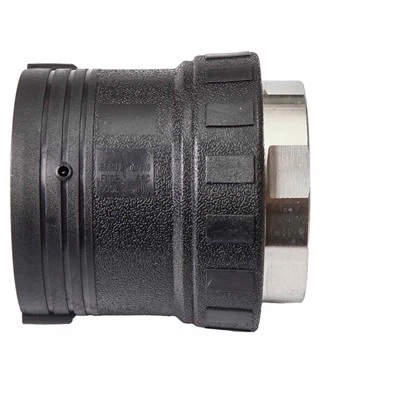


Hey there! I'm a supplier of Electrofusion Threaded products, and today I wanna chat about corrosion prevention measures for electrofusion threaded stuff in marine environments. As we all know, the marine environment is super harsh. It's full of saltwater, high humidity, and all sorts of chemicals, which can seriously mess with electrofusion threaded components. So, let's dig into how we can keep these parts from corroding.
First off, let's understand why corrosion happens in the marine environment. Saltwater is a major culprit. It contains a high concentration of ions, especially chloride ions. These ions can break down the protective oxide layer on the surface of metals, making them more vulnerable to corrosion. Also, the high humidity in the marine environment speeds up the corrosion process. When water vapor condenses on the surface of electrofusion threaded parts, it forms a thin film of water. This film can act as an electrolyte, facilitating the flow of electrons and promoting corrosion.
Now, let's talk about some practical corrosion prevention measures.
Material Selection
The choice of material is crucial. For electrofusion threaded products in marine environments, we should go for materials that are highly resistant to corrosion. Stainless steel is a great option. It contains chromium, which forms a passive oxide layer on the surface. This layer acts as a barrier, preventing oxygen and water from reaching the metal underneath. There are different grades of stainless steel, and for marine use, we usually recommend grades like 316 or 316L. These grades have a higher molybdenum content, which further enhances their corrosion resistance.
Another option is high - density polyethylene (HDPE). HDPE is a non - metallic material that is inherently resistant to corrosion. It doesn't react with saltwater or most chemicals found in the marine environment. We offer a range of HDPE electrofusion threaded products, such as the Male Thread Adaptor HDPE and Female Thread Adapter HDPE. These products are not only corrosion - resistant but also lightweight and easy to install.
Surface Coating
Even if we use corrosion - resistant materials, applying a surface coating can provide an extra layer of protection. There are several types of coatings available.
One common coating is epoxy coating. Epoxy coatings are known for their excellent adhesion and chemical resistance. They can form a tough, protective film on the surface of electrofusion threaded parts. Before applying the epoxy coating, the surface of the part needs to be properly prepared. This usually involves cleaning and sandblasting to remove any dirt, rust, or contaminants. Once the surface is prepared, the epoxy coating can be applied using spray or brush methods.
Another option is zinc coating. Zinc is a sacrificial metal. When it's coated on a metal surface, it corrodes preferentially, protecting the underlying metal. Galvanizing is a popular method of applying a zinc coating. Hot - dip galvanizing involves dipping the electrofusion threaded part into a bath of molten zinc. This creates a thick, durable zinc layer that provides long - term corrosion protection.


Design Considerations
Good design can also help prevent corrosion. For example, we should avoid creating crevices or areas where water can accumulate. Crevices can trap saltwater and other corrosive substances, leading to crevice corrosion. When designing electrofusion threaded connections, we should ensure that the threads are well - designed and tightened properly. Loose connections can allow water and air to enter, increasing the risk of corrosion.
We should also consider the drainage of the system. If water can drain freely from the electrofusion threaded components, it reduces the time that the parts are in contact with the corrosive medium. For example, in a pipeline system, we can design the pipes with a slope to ensure proper drainage.
Regular Inspection and Maintenance
Regular inspection and maintenance are essential for preventing corrosion. We should inspect the electrofusion threaded parts regularly for signs of corrosion, such as rust spots, pitting, or changes in the surface appearance. If any signs of corrosion are detected, we need to take immediate action.
This may involve cleaning the parts to remove any corrosion products and then applying a new coating if necessary. We should also check the tightness of the connections. Loose connections can be tightened to prevent water and air from entering.
Cathodic Protection
Cathodic protection is a technique that can be used to protect electrofusion threaded parts in the marine environment. There are two types of cathodic protection: sacrificial anode protection and impressed current cathodic protection.
In sacrificial anode protection, a more active metal (such as magnesium or zinc) is connected to the electrofusion threaded part. The sacrificial anode corrodes instead of the protected part. The anode needs to be periodically replaced as it corrodes over time.
Impressed current cathodic protection involves applying an external direct current to the electrofusion threaded part. This current makes the part act as a cathode, preventing it from corroding. This method requires a power source and a reference electrode to monitor the potential of the protected part.
In conclusion, preventing corrosion of electrofusion threaded products in the marine environment requires a combination of material selection, surface coating, design considerations, regular inspection and maintenance, and cathodic protection. By taking these measures, we can ensure the long - term performance and reliability of our electrofusion threaded products.
If you're in the market for high - quality electrofusion threaded products that are suitable for marine environments, we've got you covered. We offer a wide range of products, including the PE Electrofusion Male Threaded Insert. Whether you need a single part or a large - scale supply, we can meet your needs. If you have any questions or want to discuss your specific requirements, feel free to reach out to us. We're more than happy to help you find the best solutions for your project.
References
- Jones, D. A. (1992). Principles and Prevention of Corrosion. Macmillan Publishing Company.
- Fontana, M. G. (1986). Corrosion Engineering. McGraw - Hill.
- Roberge, P. R. (2006). Corrosion Basics: An Introduction. NACE International.