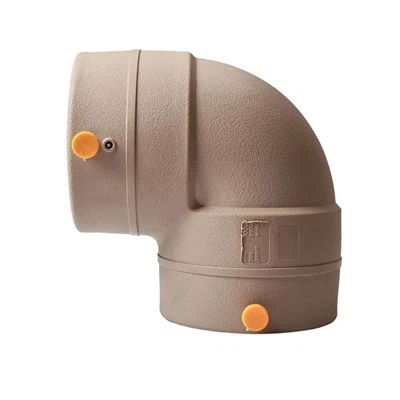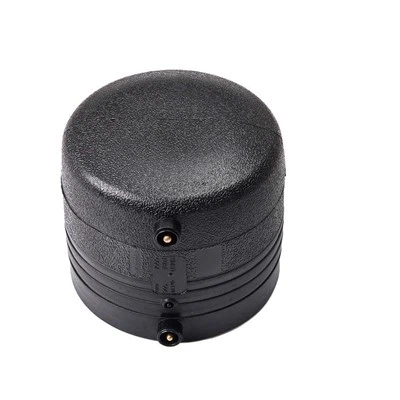

Electrofusion flanges are pipe fittings that connect pipes using electric heating technology. They are primarily used for quick, leak-tight connections in polyethylene (PE) piping systems. Their core principle is to utilize a socket structure with an internal heating wire. When electricity is applied, the PE material melts and fuses with the outer wall of the pipe at a molecular level. Cooling creates a high-strength seal. Based on the process, they are available in three main types: straight-through, reducer, and flanged.
In terms of technical characteristics, electric fusion flanges offer three core advantages: 1) Connection strength can reach over 90% of the pipe strength, significantly exceeding mechanical connection methods; 2) An integrated temperature-time control system ensures precise welding process parameters, eliminating operator error; and 3) Uniform fusion around the entire circumference ensures leak-free sealing at 0.1 MPa. Industry standards primarily refer to GB/T 13663.2-2018, "Polyethylene (PE) Piping Systems for Water Supply - Part 2: Fittings," and ISO 8085-3.
Applications focus on five key areas: connecting DN300-DN1200 main pipelines in municipal water supply and drainage projects; medium-pressure pipelines (0.4-0.8 MPa) in gas transmission systems; corrosive media transportation in chemical plants; polyethylene piping systems on offshore platforms; and mobile pipe networks for agricultural irrigation. In coal mine tunnel support and grouting systems, its anti-static version meets the MT558.3-2005 mining standard.

Strictly adhere to a four-step procedure during installation: 1) During the pretreatment phase, pipe ends must be cut smooth, scraping the oxide layer to a depth of 0.2-0.3 mm; 2) The centering assembly gap must be controlled within 0.5 mm; 3) During the welding phase, select the voltage (39.5 ± 0.5 V) and time (approximately 210 seconds for DN200) based on the pipe diameter; and 4) During the cooling phase, the pipe must be cooled naturally to below 40°C. Common risks include cold solder joints (due to unstable voltage) and over-melting (due to timing errors), requiring airtightness testing using specialized testing equipment.
Mainstream products on the market are categorized into two temperature classes: standard (-20°C to 40°C) and low-temperature (-40°C to 60°C), with pressure ratings ranging from PN6 to PN16. The latest technological developments include traceable flanges that use smart chips to record welding parameters, and composite flanges with added glass fiber reinforcement. Three certifications should be carefully checked when purchasing: the Special Equipment Manufacturing License (TSG), the Drinking Water Hygiene Permit (for water supply projects), and the EU CE certification (for export projects). We currently offer PE fusion flanges, made of national standard Grade 1 carbon steel or stainless steel, offering strong corrosion resistance and suitability for water and oil media. Available in sizes from DN50 to DN2000, they can be delivered to our factory.