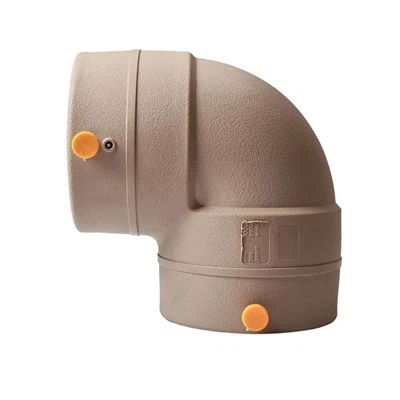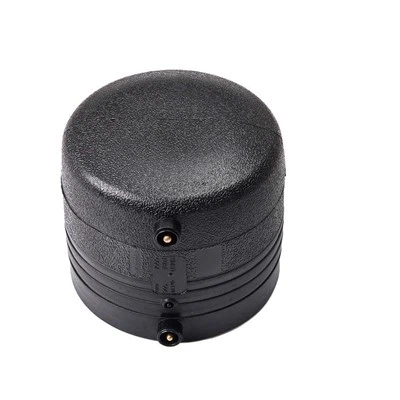

The electric fusion elbow is a pipe fitting widely used in pipe connection systems. Its core operating principle relies on electric fusion welding technology. This technology uses heat generated by electric current to achieve a secure connection between pipes. Specifically, the electric fusion elbow is designed with a special electric fusion sleeve, the inner wall of which is evenly coated with a special heat-melting material. When connecting pipes, the operator first accurately fits the electric fusion elbow onto the ends of the pipes to be connected and then powers the electric fusion sleeve using an external power supply.
When current flows through the electric fusion sleeve, it generates Joule heating, gradually heating the heat-melting material on the inner wall of the sleeve to a molten state. As the heat continues to transfer, the material of the pipe end in contact with it also begins to melt, forming a molten mixed layer at the contact interface. The precise design of the electric fusion sleeve ensures even heat distribution during welding, allowing the materials in the weld area to fully fuse, ultimately forming a continuous, uniform, and defect-free weld.
From a technical perspective, electric fusion welding involves precisely regulating the welding temperature by controlling current parameters (such as voltage, amperage, and duration). Advanced electric fusion elbows are typically equipped with temperature control systems that monitor and adjust the welding temperature in real time, ensuring it remains within a narrow range near the material's melting point. This ensures weld quality while preventing damage to the pipe due to overheating.
In terms of application scenarios, electric fusion elbows, with their significant advantages such as stable and reliable welding quality, ease of operation (welding requires only a power connection), and adaptability (not limited by indoor or outdoor environmental conditions), have found widespread use in industries such as the petroleum, chemical, and natural gas industries, where tight sealing and strength requirements are paramount. Furthermore, the welding process generates minimal smoke and noise, meeting modern industrial requirements for environmental protection and operator comfort.
Regarding industry standards, the design and production of electric fusion elbows must strictly adhere to relevant standards and specifications for pipe fittings, such as those for material selection, dimensional accuracy, and the performance of the fusion layer. Furthermore, the welding process must be conducted according to established operating procedures to ensure consistent and reliable welding quality.