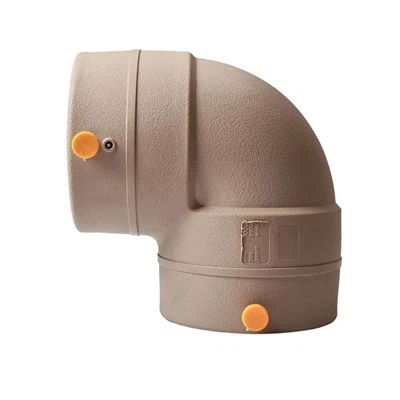


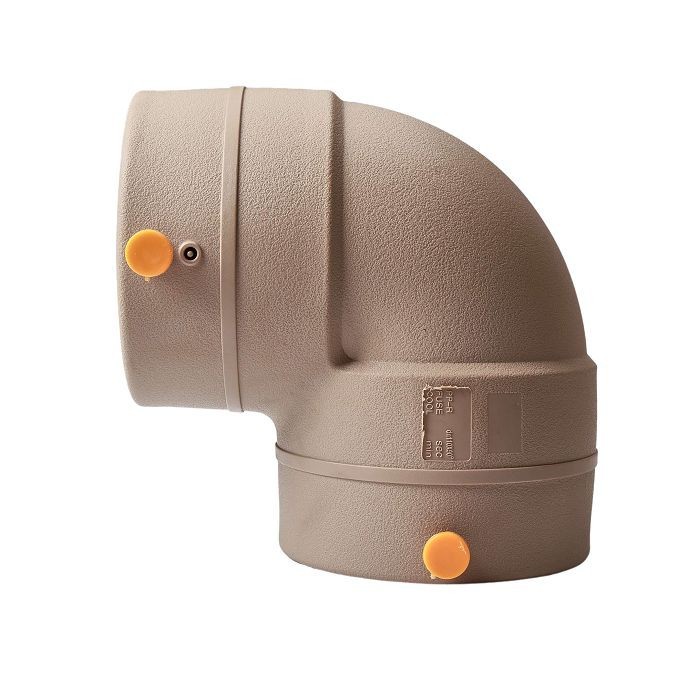


Electrofusion and butt fusion fittings are specialized components for plastic pipelines. The key difference is that Electrofusion Threaded fittings do not require butt alignment and pressure control. Instead, they use an integrated resistor to heat the pipe end, creating a chemical bond. This method is well-suited for complex terrain. Butt fusion, however, uses a heated plate to melt the pipe ends, which are then pressed together. This process is more susceptible to operator technique. Electrofusion generally provides more consistent weld integrity and uniform tensile strength, whereas butt fusion can sometimes result in partial fusion.
We are a source manufacturer with our own patents and multiple innovative products. We integrate innovation and quality into our products, implementing strict quality control from raw materials to final shipment. Supported by our professional, full-process after-sales team, we don't just provide products-we take responsibility for your project.
DN110 PPR Electrofusion Coupling vs. PE Electrofusion Coupling: Parameter Comparison
|
Parameter |
PPR Electrofusion Coupling (S110-PPR) |
PE Electrofusion Coupling (S110) |
Difference Description |
|
Model Number |
S110-PPR |
S110 |
Suffix indicates material difference |
|
Unit Weight (kg) |
0.8 |
0.555 |
PPR version is heavier due to higher material density |
|
Dimensions (mm) |
57×42×45 |
67×54×45.5 |
PPR version has a more compact structure |
|
Compatible Pipe |
PPR Pipe |
PE Pipe |
Core difference: Applicable system |
|
Inner Diameter (mm) |
110 |
110 |
Matches the same pipe diameter |
|
Outer Diameter (mm) |
138 |
132 |
PPR version has a larger OD |
|
Wall Thickness (mm) |
14 |
11 |
PPR wall thickness is significantly greater, enhancing pressure/temperature rating |
|
Height (mm) |
148.5 |
146 |
Height is nearly identical |
|
Socket Depth (mm) |
71 |
72 |
Socket depth is basically consistent |
|
Fusion Zone Width (mm) |
40 |
37 |
PPR version has a slightly wider fusion zone |


Core Differences Summary
PPR Electrofusion Coupling: Features thicker walls and a more robust design for high-temperature/high-pressure systems (e.g., hot water, central heating), connecting via thermal fusion with PPR pipes.
PE Electrofusion Coupling: Features thinner walls and a lighter design, typically used for ambient temperature water supply in municipal/building applications (water/gas), connecting via electrofusion with PE pipes.
Selection Advice
Select products based on the intended application (cold or hot water). These products are not interchangeable. The choice depends on the system type (PPR or PE) and the medium being transported (cold or hot water). Always choose PPR Electrofusion Pipe Fittings specifically for PPR hot water systems.
About Us
We believe that 'Made in China' signifies 'Quality,' 'Innovation,' and 'Responsibility.' Zhejiang Fenghe Piping Co., Ltd. is committed not only to providing high-quality products but also to promoting a concept of quality, contributing to progress within our industry and society by introducing the best Chinese industrial products to the world. 'Our insistence on using 100% virgin materials reflects our sense of responsibility towards our mission.' Products made from virgin materials have cleaner, more reliable inner walls and superior resistance to environmental stress cracking, ensuring underground pipelines remain leak-free and burst-free for decades, even a century.
FAQ
Common Issues with PPR Electrofusion Fittings
Leakage after fusion
Often caused by insufficient pipe insertion depth or incorrect fusion parameters. The joint must be re-fused according to specifications.
Fitting cracking
Usually due to impact during handling in low temperatures or over-bending during installation. Replace the fitting and implement frost protection measures in winter.
Resistor wire damage
Often caused by short circuits from moisture on the contacts during storage. Select high-quality PPR Electrofusion Pipe Fittings and ensure proper insulation protection. Regular inspection of pipeline joints can help detect potential issues early.
Installation Procedure for PPR Electrofusion Fittings
Cutting
Cut the PPR pipe to the required length using pipe cutters. Ensure the cut is square and burr-free.
01
Cleaning
Wipe the pipe end to remove dirt, grease, etc., using isopropyl alcohol.
02
Assembly
Insert the pipe into the socket up to the depth mark on the fitting.
03
Connection
Connect the welder's power leads to the corresponding terminals on the fitting. Set the welding parameters (current/time) as displayed by the welder and initiate the cycle.
04
Heating/Cooling
The fusion process begins. After completion, the joint must cool naturally for at least 30 minutes before introducing water. Rapid cooling must be avoided to prevent leaks.
05
Hot Tags: PPR electrofusion pipe fittings, China PPR electrofusion pipe fittings manufacturers, suppliers, factory, PPR Electrofusion Flange, Ppr Electrofusion 90 Degree Elbow, PPR Electrofusion Coupler, PPR Electrofusion Tee, ppr electrofusion fittings, Electrofusion Ppr