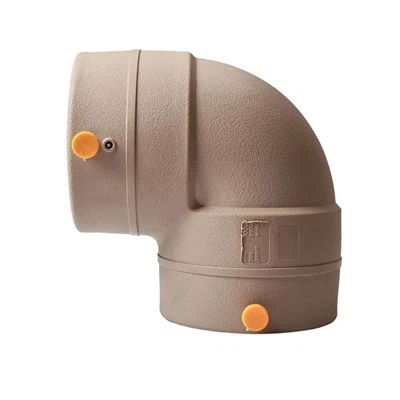


The DN160 PPR Electrofusion Tee, manufactured from Borealis RA140E/PPB4228 material in gray and rated for 20 kg/cm² pressure, is designed for splitting or converging flows within hot water systems. Its branch structure is reinforced to create a more balanced wall thickness distribution at the junctions where the branch pipes connect to the main pipe. Standing 302 mm high with a socket depth of 88 mm and a fusion zone width of 41 mm, this PPR Electrofusion Tee ensures each connection point has a uniform and identical welding area. It is commonly used for creating branch connections on district heating networks, as well as for main or branch line junctions supplying domestic water or central air conditioning hot water circulation in high-rise buildings, guaranteeing long-term, reliable, and leak-free sealing at splitting points in high-temperature hot water systems.
Parameter Table
|
Parameter |
Value |
Parameter |
Value |
|
Model |
T160-PPR |
Unit Weight |
4.185 kg |
|
Compatible Pipe Size |
DN160 |
Dimensions |
75×64×31 mm |
|
Inner Diameter |
160 mm |
Outer Diameter |
196 mm |
|
Wall Thickness |
20 mm |
Height |
302 mm |
|
Socket Depth |
88 mm |
Fusion Zone Width |
41 mm |


Key Advantages Compared to Metal Fittings
The corrosion resistance of electrofusion fittings is unmatched by other types. The base material is stable, resistant to atmospheric erosion, and offers good resistance to acids, alkalis, salt solutions, organic solvents, and oxidizing agents. It does not suffer from 'rust corrosion' like metal pipelines, making it particularly suitable for long-term water conveyance in corrosive environments, such as municipal water supply projects, chemical plants, fuel transfer stations, and wastewater treatment plants handling liquid media with a pH between 3 and 11. It does not release corrosive substances into the surroundings, possesses strong corrosion resistance, avoids damaging the surrounding soil, and can withstand prolonged soil corrosion. When used for buried underground water supply lines under suitable conditions, its service life can exceed 50 years.
For Beginners: The Three Key Steps for Electrofusion Welding
'Scrape'
Use a scraping tool to remove the oxide layer from the pipe end. Then, wipe the pipe end with an alcohol-soaked cloth to remove oil and contaminants.
'Align & Push'
Insert the pipe into the fitting's socket (ensure it is aligned with the insertion mark on the fitting and is not crooked). Then, fit the interface seal ring/gasket (if applicable) and push firmly until fully seated (apply sufficient force; misalignment will result in a poor weld).
'Connect'
Connect the welder's leads to the fitting's terminals. Input the correct welding parameters based on the pipe/fitting specifications into the welder's control panel. Allow the welder to complete its cycle, then power it off. Let the joint cool and stabilize undisturbed for a period (at least 30 minutes). Afterwards, the joint is ready for use. Important: If the ambient temperature during welding is below -5°C, insulation measures are required before proceeding to avoid cold welds or leakage.
FAQ
Hot Tags: PPR electrofusion tee, China PPR electrofusion tee manufacturers, suppliers, factory, PPR Electrofusion Flange, Ppr Electrofusion 90 Degree Elbow, PPR Electrofusion Coupler, PPR Electrofusion Tee, ppr electrofusion fittings, Electrofusion Ppr