


Are flange adaptors for HDPE pipes affected by soil movement in underground installations?
Underground pipe installations are a critical part of many infrastructure projects, including water supply, sewage systems, and gas distribution. High - density polyethylene (HDPE) pipes have gained popularity in recent years due to their numerous advantages such as corrosion resistance, flexibility, and long service life. Flange adaptors are essential components when connecting HDPE pipes to other types of pipes or equipment. However, one of the significant challenges in underground installations is soil movement, and it is crucial to understand how it impacts flange adaptors for HDPE pipes.
Understanding Soil Movement
Soil movement can occur due to various factors. Natural causes include seasonal changes in soil moisture, which can lead to expansion and contraction of the soil. Freeze - thaw cycles in colder regions also contribute to significant soil movement. Earthquakes are another natural phenomenon that can cause sudden and severe soil displacement. Human - induced factors such as construction activities near the pipeline, excavation, and compaction can also disrupt the soil and cause it to move.
The type of soil also plays a vital role in the extent of movement. For instance, clay soils are more prone to swelling and shrinking with changes in moisture content compared to sandy soils. Loose or poorly compacted soils are also more likely to shift under external forces.
Impact of Soil Movement on Flange Adaptors for HDPE Pipes
Flange adaptors for HDPE pipes are designed to provide a secure and leak - proof connection between HDPE pipes and other components. However, soil movement can pose several challenges to these adaptors.
One of the primary concerns is the stress exerted on the adaptor. When the soil moves, it can apply uneven forces on the HDPE pipe and the flange adaptor. This can lead to bending, torsion, or axial stress on the adaptor. If the stress exceeds the design limits of the adaptor, it can cause deformation or even failure of the connection. For example, excessive bending stress can cause cracks in the adaptor body, leading to leaks and potential system failures.
Another issue is the misalignment of the connection. Soil movement can cause the HDPE pipe and the connected component to shift relative to each other. This misalignment can put additional strain on the flange bolts and gaskets. If the misalignment is severe, the bolts may not be able to maintain the proper clamping force, and the gasket may not seal effectively, resulting in leakage.
How Our Flange Adaptors for HDPE Pipes Are Designed to Withstand Soil Movement
As a leading supplier of flange adaptors for HDPE pipes, we understand the challenges posed by soil movement in underground installations. Our products are designed with several features to mitigate the impact of these challenges.
Firstly, we use high - quality HDPE materials with excellent flexibility and strength. The flexibility of HDPE allows the adaptor to absorb some of the stress caused by soil movement without breaking. It can deform slightly to accommodate the movement and then return to its original shape once the stress is relieved.
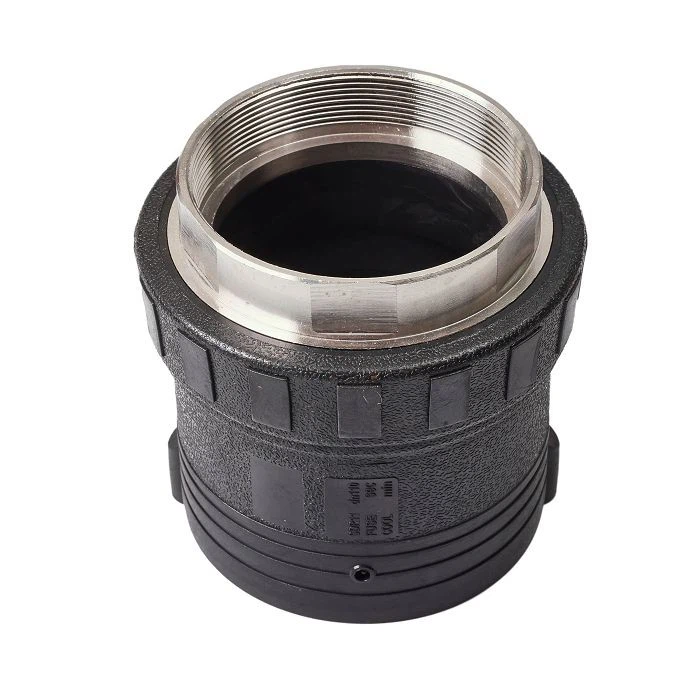

Our flange adaptors are also designed with a reinforced structure. We use internal and external ribs to increase the stiffness and strength of the adaptor. This helps to distribute the stress more evenly across the adaptor body, reducing the risk of localized stress concentration and cracking.
In addition, we pay special attention to the design of the flange connection. Our gaskets are made of high - performance materials that can maintain a good seal even under misaligned conditions. The bolts are carefully selected and tightened to the appropriate torque to ensure a secure connection.
We offer a variety of flange adaptors for different applications, including Electrofusion Threaded, Male Adaptor HDPE, and HDPE Female Threaded Adaptor. Each type is engineered to meet the specific requirements of different underground environments and pipe systems.
Installation Tips to Minimize the Impact of Soil Movement
Proper installation is crucial to ensure that our flange adaptors for HDPE pipes can withstand soil movement. Here are some installation tips:
- Proper bedding: The pipe and adaptor should be installed on a well - prepared bedding material. The bedding should be uniform and provide sufficient support to the pipe and adaptor. This helps to distribute the load evenly and reduce the impact of soil movement.
- Pipe restraint: In areas with high soil movement, pipe restraint systems can be used. These systems prevent the pipe from moving excessively and reduce the stress on the flange adaptor.
- Expansion loops: For long pipe runs, expansion loops can be installed. These loops allow the pipe to expand and contract freely with temperature changes, reducing the stress on the adaptor.
- Monitoring: After installation, it is recommended to monitor the pipeline regularly. This can help to detect any signs of soil movement or adaptor damage early and take appropriate measures to prevent failures.
Case Studies
We have completed numerous projects where our flange adaptors for HDPE pipes have been installed in areas with significant soil movement. In one project in a region with clay soil, which is prone to swelling and shrinking, our reinforced flange adaptors were used in a water distribution system. Despite the seasonal soil movement, the adaptors maintained a leak - proof connection throughout the project's lifespan.
In another project in an earthquake - prone area, our adaptors were installed in a sewage system. The flexibility of the HDPE adaptors allowed them to absorb the shock and stress caused by the seismic activity, preventing any major damage to the pipeline system.
Conclusion
Soil movement is a significant challenge in underground installations of HDPE pipes and flange adaptors. However, with proper product design, installation, and monitoring, the impact of soil movement can be minimized. As a trusted supplier of flange adaptors for HDPE pipes, we are committed to providing high - quality products that can withstand the harsh conditions of underground environments.
If you are involved in an underground pipe project and are looking for reliable flange adaptors for HDPE pipes, we invite you to contact us for a detailed discussion. Our team of experts can provide you with the best solutions based on your specific requirements. We look forward to working with you to ensure the success of your project.
References
- ASME B31.3 Process Piping Code
- ASTM D3350 Standard Specification for Polyethylene (PE) Plastic Pipe and Fittings Materials
- ISO 4427 Plastics pipes and fittings — Polyethylene (PE) pipes for water supply — Specifications


