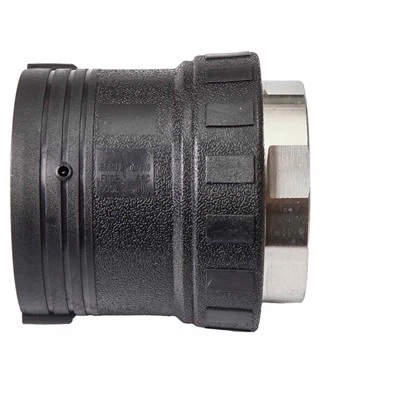


High-Density Polyethylene (HDPE) female threaded adaptors have become a staple in various industries due to their numerous advantages. As a supplier of these essential components, I often encounter questions about their performance under different conditions. One such crucial question is whether HDPE female threaded adaptors are resistant to abrasion. In this blog post, I will delve into the science behind HDPE's abrasion resistance, explore real - world applications, and provide insights for those considering using these adaptors in their projects.
Understanding HDPE and Its Properties
HDPE is a thermoplastic polymer made from petroleum. It has a high strength - to - density ratio, which gives it excellent durability and toughness. The molecular structure of HDPE consists of long chains of polyethylene molecules that are closely packed together. This tight molecular arrangement contributes to its high density, as well as its resistance to many environmental factors, including abrasion.
Abrasion resistance is the ability of a material to withstand the wearing away caused by friction when it comes into contact with another surface. For HDPE female threaded adaptors, this property is vital, especially in applications where the adaptors are exposed to rough or moving materials, or in environments with high levels of particulate matter.
The Science of HDPE's Abrasion Resistance
The abrasion resistance of HDPE can be attributed to several factors. Firstly, its high molecular weight contributes to its toughness. The long polymer chains in HDPE are entangled, which makes it difficult for external forces to break them apart. When an abrasive force is applied to the surface of an HDPE female threaded adaptor, these entangled chains can absorb and distribute the energy, reducing the likelihood of surface damage.
Secondly, HDPE has a relatively low coefficient of friction. This means that when the adaptor comes into contact with other surfaces, there is less frictional force generated. As a result, there is less wear and tear on the surface of the adaptor. The smooth surface of HDPE also plays a role in reducing abrasion. It allows particles to slide over the surface rather than getting embedded and causing scratches.
Real - World Applications
HDPE female threaded adaptors are used in a wide range of industries, and their abrasion resistance is a key factor in many of these applications.
Water and Wastewater Treatment
In water and wastewater treatment plants, HDPE female threaded adaptors are used to connect pipes and fittings. These adaptors are often exposed to water that contains sand, silt, and other abrasive particles. The abrasion resistance of HDPE ensures that the adaptors can withstand the constant flow of these particles without significant damage. This helps to maintain the integrity of the piping system and reduces the need for frequent replacements. For example, in a large - scale wastewater treatment facility, the use of HDPE Female Threaded Adaptor can prevent leaks due to abrasion - induced damage, which could lead to environmental contamination and costly repairs.
Mining and Aggregate Industries
In mining and aggregate operations, HDPE female threaded adaptors are used in slurry pipelines and other systems that transport abrasive materials such as sand, gravel, and ore. The high abrasion resistance of HDPE allows these adaptors to handle the harsh conditions in these industries. For instance, in a gold mining operation, the adaptors are exposed to a slurry of gold - bearing ore and water, which is highly abrasive. The Female Thread Adaptor HDPE can resist the wear caused by the constant flow of this slurry, ensuring the efficient operation of the pipeline system.


Chemical Processing
In chemical processing plants, HDPE female threaded adaptors are used to connect pipes and equipment. These adaptors are often exposed to chemicals that can be corrosive as well as abrasive. HDPE's resistance to both abrasion and many chemicals makes it an ideal material for these applications. For example, in a plant that produces fertilizers, the adaptors are in contact with granular fertilizers and chemical solutions. The abrasion - resistant PE Electrofusion Female Threaded Insert can prevent damage from the movement of the granular fertilizers and the corrosive effects of the chemical solutions.
Testing and Certification
To ensure the quality and abrasion resistance of HDPE female threaded adaptors, we conduct rigorous testing. These tests include abrasion tests using standardized methods such as the Taber Abrasion Test. In this test, a rotating abrasive wheel is applied to the surface of the adaptor, and the amount of material lost is measured. Our adaptors consistently meet or exceed industry standards for abrasion resistance.
In addition to in - house testing, our products are also certified by independent testing laboratories. These certifications provide our customers with the assurance that our HDPE female threaded adaptors are of high quality and can perform well in abrasive environments.
Comparing with Other Materials
When compared to other materials commonly used for threaded adaptors, such as metal or PVC, HDPE offers significant advantages in terms of abrasion resistance.
Metal adaptors, while strong, are prone to corrosion and rust, which can accelerate the wear process. In abrasive environments, the corrosion products can act as additional abrasives, further damaging the adaptor. PVC adaptors, on the other hand, are less resistant to abrasion than HDPE. The molecular structure of PVC is less dense and less tough than that of HDPE, making it more susceptible to surface damage.
Maintenance and Long - Term Performance
One of the benefits of using HDPE female threaded adaptors is their low maintenance requirements. Due to their high abrasion resistance, these adaptors can last for a long time without significant wear. However, it is still important to perform regular inspections to ensure that the adaptors are in good condition.
During inspections, check for signs of surface damage, such as scratches or gouges. If any damage is detected, it is important to assess whether the adaptor can still perform its function safely. In most cases, minor abrasions on HDPE adaptors do not affect their performance, but more severe damage may require replacement.
Conclusion and Call to Action
In conclusion, HDPE female threaded adaptors are highly resistant to abrasion, making them an excellent choice for a wide range of applications in industries where abrasion is a concern. Their unique molecular structure, low coefficient of friction, and high strength - to - density ratio contribute to their superior abrasion resistance.
If you are in need of high - quality, abrasion - resistant HDPE female threaded adaptors for your project, I encourage you to reach out to us. We are committed to providing our customers with the best products and services. Whether you are working on a small - scale plumbing project or a large - scale industrial installation, our team of experts can help you find the right adaptors for your needs. Contact us today to start a discussion about your requirements and explore how our HDPE female threaded adaptors can benefit your project.
References
- ASTM International. "Standard Test Method for Abrasion Resistance of Organic Coatings by the Taber Abraser." ASTM D4060 - 19.
- PlasticsEurope. "High - Density Polyethylene (HDPE): Properties and Applications."