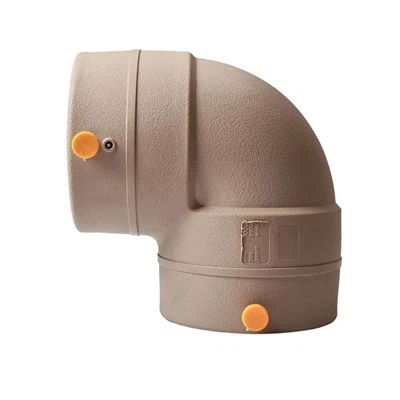


Yo, what's up everyone! I'm stoked to be here and talk about electrofusion fittings. As a supplier of these nifty little things, I've seen firsthand how they're changing the game in pipe joining. So, let's dive right in and figure out how electrofusion fittings work.
The Basics of Electrofusion Fittings
First off, electrofusion fittings are a type of plumbing or piping component used to connect pipes together. They're super handy because they create a really strong, leak - proof joint. These fittings are made from different materials like polyethylene (PE), polypropylene (PPR), etc. You can check out our Poly Electrofusion Fittings to get an idea of the wide range we offer.
The main idea behind electrofusion is using electricity to heat up and melt the fitting and the pipe at the joint. This creates a homogenous bond, which means the joint becomes as strong as the pipe itself. It's like welding, but for pipes!
Components of an Electrofusion Fitting
An electrofusion fitting has a few key parts. First, there's the body of the fitting, which is usually made of the same material as the pipe it's going to connect. This ensures compatibility. Inside the fitting, there's a heating element. This is typically a wire coil that runs around the inner surface of the fitting.
The fitting also has two electrical terminals. These are like the plugs that you connect to a power source. When you turn on the power, the electricity flows through the heating element, and that's where the magic happens.
The Working Process
Let's break down the working process of electrofusion fittings step by step.
Step 1: Preparation
Before you start the actual joining process, you need to prepare the pipe and the fitting. The pipe ends need to be clean and free of any dirt, grease, or debris. You can use a special cleaner to make sure the surfaces are in top - notch condition. Also, the pipe should be cut straight so that it fits snugly into the fitting.
Step 2: Insertion
Once the pipe and fitting are prepped, you insert the pipe into the fitting. Make sure it goes in all the way to the depth mark on the fitting. This ensures that the joint will be properly formed.
Step 3: Connection to the Power Source
Now it's time to connect the electrical terminals of the fitting to an electrofusion welding machine. This machine is designed to provide the right amount of electricity at the right voltage and for the right duration. Different fittings have different welding parameters, so you need to set the machine accordingly.
Step 4: Welding
When you start the welding process, the electricity flows through the heating element in the fitting. The heating element heats up, and as it does, it melts the inner surface of the fitting and the outer surface of the pipe. The heat causes the plastic to become soft and malleable.
As the plastic melts, it mixes together, creating a fusion between the fitting and the pipe. The welding machine monitors the process and shuts off automatically when the right amount of heat has been applied. This is important because over - heating or under - heating can lead to a weak joint.
Step 5: Cooling
After the welding is done, you need to let the joint cool down. This is a critical step because the plastic needs time to solidify and form a strong bond. You shouldn't move or put any stress on the joint during this cooling period. Usually, it takes a few minutes for the joint to cool completely, depending on the size of the fitting.
Benefits of Using Electrofusion Fittings
There are a ton of benefits to using electrofusion fittings. One of the biggest advantages is the strength of the joint. Since the fitting and the pipe are fused together, the joint is as strong as the pipe itself. This means it can handle high pressures and is less likely to leak.
Another benefit is the ease of installation. Compared to other pipe - joining methods like traditional welding or using mechanical connectors, electrofusion is much quicker and simpler. You don't need a lot of specialized tools or a highly skilled operator.


Electrofusion fittings are also very versatile. They can be used in a wide range of applications, from water supply systems to gas pipelines. For example, our FL75 HDPE Electrofusion Flange Fitting is great for connecting pipes to flanges in various industrial settings.
Different Types of Electrofusion Fittings
We offer a wide variety of electrofusion fittings to meet different needs. One popular type is the elbow fitting. Our PPR Electrofusion 45° Elbow Fitting is a great example. Elbow fittings are used to change the direction of the pipe. They come in different angles, like 45° and 90°, to suit different installation requirements.
There are also tee fittings, which are used to create a branch in the pipe system. Couplings are used to connect two pipes of the same diameter end - to - end. And flange fittings, as mentioned earlier, are used to connect pipes to flanges for easy connection to other equipment.
Quality and Safety
As a supplier, we take quality and safety very seriously. All our electrofusion fittings are made from high - quality materials and undergo strict quality control checks. We make sure that the heating elements are properly installed and that the fittings meet all the relevant industry standards.
Safety is also a top priority. When using electrofusion fittings, it's important to follow the manufacturer's instructions carefully. This includes proper installation, using the right welding machine, and taking precautions during the welding and cooling process.
Contact Us for Your Electrofusion Fitting Needs
If you're in the market for electrofusion fittings, we've got you covered. Whether you need a small quantity for a DIY project or a large order for a commercial installation, we can provide you with high - quality products at competitive prices.
Don't hesitate to reach out to us for more information or to start a purchase negotiation. We're here to help you find the perfect electrofusion fittings for your specific requirements.
References
- Pipe Joining Handbook - A comprehensive guide on different pipe - joining methods including electrofusion.
- Plastics Piping Institute Publications - These publications cover various aspects of plastic pipe systems and fittings.