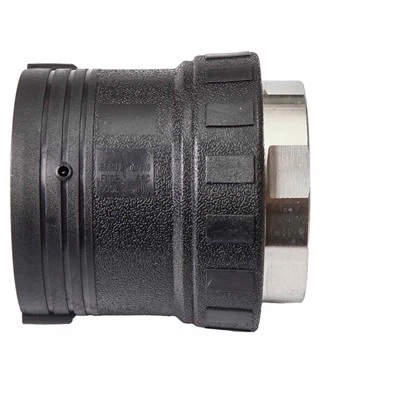


Hey there! As a supplier of Female Thread Adaptor HDPE, I often get asked about the different connection methods available for these adaptors. So, I thought I'd put together this blog post to share some insights on the topic.
First off, let's talk a bit about what a Female Thread Adaptor HDPE is. It's a crucial component in many piping systems, especially those that use High - Density Polyethylene (HDPE) pipes. These adaptors have a female thread on one end, which allows them to be connected to other components with male threads, and they're made from HDPE, a material known for its durability, chemical resistance, and flexibility.
1. Threaded Connection
The most straightforward connection method for a Female Thread Adaptor HDPE is the threaded connection. This is pretty much what it sounds like. You simply screw the male - threaded part of another component, like a HDPE Male Adaptor, into the female thread of the adaptor. It's a quick and easy way to make a connection, and it doesn't require any special tools other than a wrench to ensure a tight fit.
However, there are a few things to keep in mind when using a threaded connection. First, you need to make sure that the threads on both the adaptor and the component you're connecting to are compatible. That means they should have the same thread size, pitch, and type (e.g., NPT - National Pipe Thread). Also, it's a good idea to use a thread - sealing tape or compound to prevent leaks. This tape or compound fills in the small gaps between the threads, creating a more secure and leak - proof connection.
2. Butt Fusion Welding
Butt fusion welding is another popular connection method for HDPE pipes and adaptors. In this process, the ends of the HDPE pipes and the Female Thread Adaptor HDPE are heated until they're soft and then pressed together. The heat melts the HDPE material, and when the two parts are joined and cooled, they form a strong, seamless bond.
One of the big advantages of butt fusion welding is that it creates a very strong and leak - proof connection. Since the two parts are essentially fused together, there's no risk of the connection coming loose over time. It's also a great option for high - pressure applications because the welded joint can withstand a lot of stress.
However, butt fusion welding does require some specialized equipment, such as a butt fusion welding machine. This machine is used to heat the ends of the pipes and adaptors evenly and apply the right amount of pressure during the welding process. You also need to have some training to use the equipment properly, as incorrect welding can lead to weak joints or leaks.
3. Electrofusion Welding
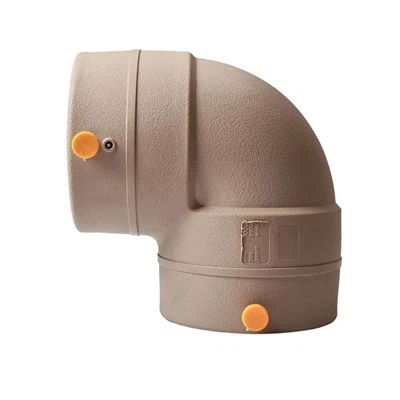
Electrofusion welding is a bit different from butt fusion welding. Instead of using an external heating source, electrofusion welding uses an electric current to heat the inside of a special electrofusion fitting. The Female Thread Adaptor HDPE can be designed with an electrofusion element built - in or can be connected using an electrofusion coupling.
The process starts by cleaning and inserting the pipes and the adaptor into the electrofusion fitting. Then, the electric current is applied, which heats the element inside the fitting. The heat melts the HDPE material, creating a bond between the fitting and the pipes/adaptor.
Electrofusion welding is a very precise method, and it's great for situations where space is limited or for hard - to - reach areas. It also doesn't require as much alignment as butt fusion welding, which can be an advantage in some installations. But like butt fusion welding, it requires specialized equipment (an electrofusion welding machine) and proper training to ensure a good weld.
4. Mechanical Couplings
Mechanical couplings are another option for connecting a Female Thread Adaptor HDPE. These couplings are essentially clamps that hold the pipes and the adaptor together. They come in different designs, but most work by tightening bolts or screws to compress the coupling around the pipes and the adaptor.
One of the benefits of mechanical couplings is that they're easy to install. You don't need any special tools other than a wrench to tighten the bolts, and they can be used in a variety of situations, including pipes of different sizes and materials. They're also a good option for temporary connections or for situations where you might need to disassemble the connection later.
However, mechanical couplings may not be as strong as welded connections, especially in high - pressure applications. There's also a risk of leaks if the coupling isn't tightened properly or if the gaskets inside the coupling wear out over time.
5. Compression Fittings
Compression fittings are a simple and effective way to connect a Female Thread Adaptor HDPE. These fittings consist of a compression nut, a compression ring (also called a ferrule), and a body. To make a connection, you insert the pipe into the fitting, place the compression ring over the pipe, and then screw the compression nut onto the body of the fitting.


As you tighten the compression nut, the compression ring is compressed against the pipe and the fitting body, creating a tight seal. Compression fittings are easy to install and don't require any special tools. They're also reusable, which can be a cost - effective option in some cases.
But like mechanical couplings, compression fittings may not be suitable for high - pressure applications. The seal can be affected by factors like vibration and temperature changes, so they're usually better for low - to medium - pressure systems.
So, those are some of the main connection methods available for a Female Thread Adaptor HDPE. Each method has its own advantages and disadvantages, and the best choice depends on your specific application, the pressure requirements, the available equipment, and your budget.
If you're in the market for Female Thread Adaptor HDPE or need more information about the connection methods, feel free to reach out. We're here to help you find the right solution for your piping system. Whether you're working on a small DIY project or a large industrial installation, we've got the expertise and the products to meet your needs.
Let's start a conversation about your project and see how we can work together to get the job done right.
References
- "HDPE Piping Systems Handbook"
- "Plastic Pipe and Fittings Installation Guide"