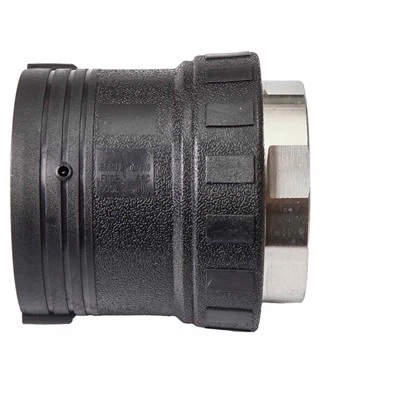


Hey there! As a supplier of HDPE female adaptors, I'm super stoked to walk you through the production process of these nifty little things. HDPE, or High-Density Polyethylene, is a type of plastic that's known for its strength, durability, and resistance to chemicals. It's widely used in various industries, especially in plumbing and piping systems, and HDPE female adaptors play a crucial role in connecting different pipes and fittings.
Step 1: Raw Material Preparation
The first step in making HDPE female adaptors is getting the raw materials ready. We source high-quality HDPE resin pellets from trusted suppliers. These pellets are like the building blocks of our adaptors. They come in different grades, and we carefully select the grade that best suits the requirements of our adaptors.
The quality of the raw material is super important because it directly affects the performance and durability of the final product. We make sure to test the resin pellets for things like density, melt flow index, and other physical properties to ensure they meet our standards. Once we're satisfied with the quality, the pellets are stored in large silos until they're ready to be used.
Step 2: Extrusion
Once the raw materials are prepped, it's time for the extrusion process. This is where the magic starts! The HDPE resin pellets are fed into an extruder, which is basically a big machine that heats and melts the pellets. Inside the extruder, there's a screw that rotates and pushes the molten plastic forward through a die.
The die is a specially designed tool that gives the plastic its shape. In the case of HDPE female adaptors, the die is shaped like a tube with the exact dimensions of the adaptor. As the molten plastic passes through the die, it takes on the shape of the die and comes out as a long, continuous tube.
The temperature and pressure inside the extruder are carefully controlled to ensure that the plastic is melted evenly and that the extruded tube has a consistent diameter and wall thickness. This is crucial because any variations in the dimensions can affect the fit and performance of the adaptor.
Step 3: Cooling and Sizing
After the extrusion process, the hot, newly formed tube needs to be cooled down quickly to solidify it. This is done by passing the tube through a cooling tank filled with water. The water cools the plastic, making it hard and rigid.
Once the tube is cooled, it goes through a sizing process. This involves passing the tube through a series of sizing rings that are slightly smaller than the desired diameter of the adaptor. The sizing rings help to ensure that the tube has the correct diameter and that the walls are straight and uniform.
Step 4: Cutting
Now that the tube is cooled and sized, it's time to cut it into individual adaptors. This is done using a cutting machine that cuts the tube into the desired length. The length of the adaptor depends on its intended use and the specifications of the customer.


The cutting process needs to be precise to ensure that each adaptor has the correct length and that the ends are clean and smooth. Any rough edges or uneven cuts can affect the sealing performance of the adaptor when it's installed.
Step 5: Threading
One of the key features of HDPE female adaptors is the internal threading. This is what allows the adaptor to be connected to other pipes or fittings with male threads. The threading process is done using a threading machine.
The threading machine has a set of cutting tools that cut the threads into the inside of the adaptor. The threads need to be cut with high precision to ensure a proper fit with the male threads of the mating component. The pitch, depth, and angle of the threads are all carefully controlled to meet the industry standards.
Step 6: Quality Control
Quality control is an essential part of the production process. At every stage, from raw material inspection to the final product, we conduct rigorous quality checks to ensure that the HDPE female adaptors meet our high standards.
We use a variety of testing methods, including visual inspection, dimensional measurement, and pressure testing. Visual inspection is used to check for any surface defects, such as cracks, bubbles, or scratches. Dimensional measurement is done using precision measuring tools to ensure that the adaptors have the correct size and shape.
Pressure testing is used to check the strength and integrity of the adaptors. We subject the adaptors to high-pressure water or air to simulate real-world conditions and make sure they can withstand the pressure without leaking or failing.
Step 7: Packaging
Once the HDPE female adaptors have passed all the quality control checks, they're ready to be packaged. We use high-quality packaging materials to protect the adaptors during shipping and storage.
The adaptors are usually packed in boxes or plastic bags, depending on the quantity and the customer's requirements. We also include a label on the packaging that provides information about the product, such as its size, specifications, and batch number.
Different Types of HDPE Female Adaptors
There are different types of HDPE female adaptors available in the market, each with its own unique features and applications. For example, the Electrofusion Threaded adaptors are designed for use in electrofusion welding systems. These adaptors have built-in heating elements that allow them to be welded to other HDPE pipes or fittings using an electrofusion welding machine.
The Male Thread Adaptor HDPE is another type of adaptor that has male threads on one end and a female socket on the other. This type of adaptor is commonly used to connect a male-threaded pipe or fitting to a female socket.
And then there's the Male Adapter HDPE, which is used to connect two different types of pipes or fittings. It has a male end on one side and a different type of connection on the other side, such as a socket or a flange.
Why Choose Our HDPE Female Adaptors?
As a supplier, we take pride in offering high-quality HDPE female adaptors that are made using the latest manufacturing techniques and the best raw materials. Our adaptors are designed to meet the highest industry standards and are tested rigorously to ensure their performance and reliability.
We also offer a wide range of sizes and specifications to meet the diverse needs of our customers. Whether you're working on a small plumbing project or a large industrial installation, we have the right adaptor for you.
If you're in the market for HDPE female adaptors, we'd love to hear from you. We can provide you with more information about our products, answer any questions you may have, and help you find the perfect adaptor for your project. So, don't hesitate to reach out and start a conversation with us about your procurement needs.
References
- Plastics Industry Association. (2023). Understanding High-Density Polyethylene (HDPE).
- Pipe and Fittings Handbook. (2022). McGraw-Hill.