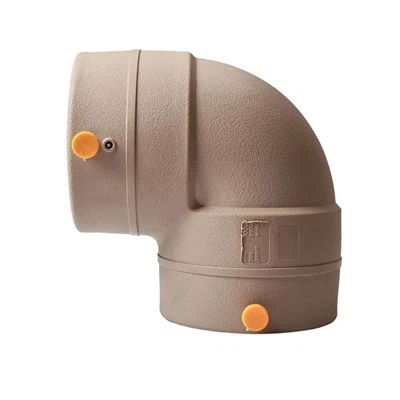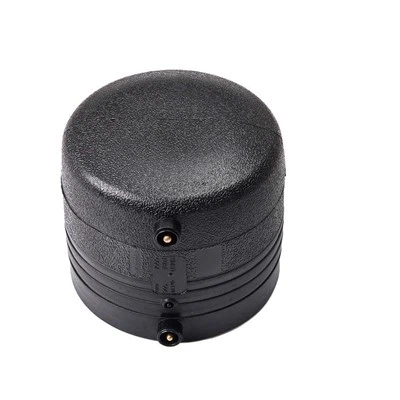

Electrofusion Tee Specifications
Electrofusion tees are like intelligent overpasses for piping systems. Their specifications are determined by three key dimensions: main pipe diameter, branch pipe diameter, and pressure capacity. Common sizes range from DN20 to DN630 to accommodate varying flow requirements. The 160-size tee is particularly suitable for medium-flow applications, ensuring efficient flow diversion without excessive space consumption. When selecting, consider the compatibility of pipe wall thickness and material. PVC and polyethylene versions each have their own suitable applications.
The Ingenious Harvard Knot Design
The Harvard Knot on the 160-size tee is the product of engineers' ingenuity:
Reinforced Structure: The spiral pattern increases the pressure capacity of the joint by 40%.
Fusing Indicator: A color-changing ring accurately displays the welding completion status.
Error-Proofing Design: Asymmetrical slots prevent reverse installation.
This structure is particularly suitable for applications with stringent sealing requirements, such as gas pipelines, where the welding creates a molecular-level bond.
Golden Rules for Sizing
Sizing isn't a simple numbers game; three key points must be considered:
Flow Matching: The combined cross-sectional area of the branch pipes should be greater than 70% of the main pipe.
Space Reserve: During installation, allow a 3-5% margin for thermal expansion and contraction.
System Balancing: For the same pipe, it is recommended to use equal-diameter tees to maintain pressure stability.