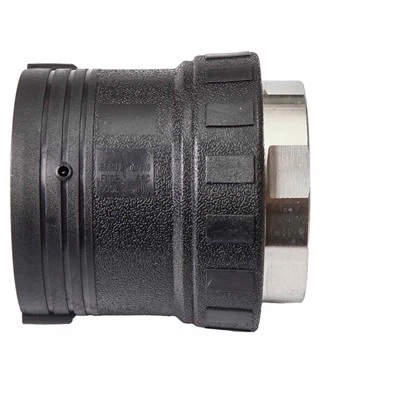


Hey there! As a supplier of electrofusion couplers, I often get asked about their chemical resistance. It's a crucial aspect, especially when these couplers are used in various industrial and plumbing applications. So, let's dive right in and explore what the chemical resistance of electrofusion couplers is all about.
First off, what are electrofusion couplers? Well, they're fittings used to join polyethylene (PE) pipes together. They work by using an electric current to heat up embedded resistance wires, which then melts the surrounding PE material, creating a strong and permanent bond. These couplers are widely used in gas, water, and other fluid distribution systems because of their reliability and ease of installation.
Now, let's talk about chemical resistance. Chemical resistance refers to a material's ability to withstand the effects of chemicals without undergoing significant degradation. For electrofusion couplers, this means they can resist the corrosive effects of various substances that they might come into contact with in different environments.
One of the main factors that determine the chemical resistance of electrofusion couplers is the type of polyethylene used in their manufacturing. High - density polyethylene (HDPE) is a popular choice for these couplers. HDPE has excellent chemical resistance properties due to its high crystallinity and non - polar nature. It can resist a wide range of acids, alkalis, and salts at moderate concentrations and temperatures.
For example, in water distribution systems, electrofusion couplers made from HDPE can handle the chlorine and other disinfectants commonly used to treat water. Chlorine is a strong oxidizing agent, but HDPE can resist its corrosive effects over a long period. This is important because it ensures the integrity of the pipe joints and prevents leaks, which could lead to water contamination or loss.
In the gas industry, electrofusion couplers also need to have good chemical resistance. Natural gas often contains small amounts of sulfur compounds, such as hydrogen sulfide (H₂S). HDPE electrofusion couplers can resist the corrosive effects of these sulfur compounds, ensuring the safe and reliable transportation of gas.
However, it's important to note that the chemical resistance of electrofusion couplers has its limits. Some strong solvents, such as aromatic hydrocarbons (e.g., benzene, toluene) and chlorinated solvents (e.g., carbon tetrachloride, trichloroethylene), can cause swelling and even dissolution of HDPE. So, if the couplers are going to be exposed to these types of chemicals, special considerations need to be taken.


Another factor that affects chemical resistance is temperature. Generally, as the temperature increases, the chemical resistance of HDPE decreases. At higher temperatures, the molecules in the HDPE become more mobile, making it easier for chemicals to penetrate the material and cause damage. So, when using electrofusion couplers in high - temperature environments, it's important to choose a material with appropriate temperature - resistance properties.
Now, let's take a look at some of the specific electrofusion coupler products we offer and how their chemical resistance plays a role in their applications.
We have Tee HDPE Electrofusion couplers. These are used when you need to create a T - shaped connection in a PE pipe system. In applications where the pipes carry water or other non - aggressive fluids, the chemical resistance of the HDPE ensures that the tee coupler remains intact and leak - free.
Our Electrofusion HDPE Tee is another great product. It's similar to the Tee HDPE Electrofusion but may have different specifications depending on the application. Whether it's for a small - scale plumbing project or a large - scale industrial fluid distribution system, the chemical resistance of the HDPE material helps to maintain the performance of the tee over time.
And then there's the Electrofusion PE End Cap. This is used to seal the end of a PE pipe. In environments where the pipe may be exposed to various chemicals, the end cap's chemical resistance prevents the chemicals from entering the pipe and causing damage to the system.
In conclusion, the chemical resistance of electrofusion couplers is a vital characteristic that ensures their performance and longevity in different applications. While HDPE offers good chemical resistance in many common scenarios, it's important to understand the limitations and choose the right coupler for the specific chemical environment.
If you're in the market for electrofusion couplers and need products with reliable chemical resistance, we're here to help. We have a wide range of high - quality electrofusion couplers that can meet your specific needs. Whether you're working on a water treatment plant, a gas distribution network, or a simple plumbing project, we've got the right coupler for you. Don't hesitate to reach out to us for more information and to start a procurement discussion.
References:
- "Handbook of Polyethylene" by Andrew Peacock
- "Plastics in Pipe Applications" by Charles A. Harper